How US Credit Works: Your Credit Identity
What credit is, how it's scored, and the documents every borrower signs — walked through field by field with Maya.
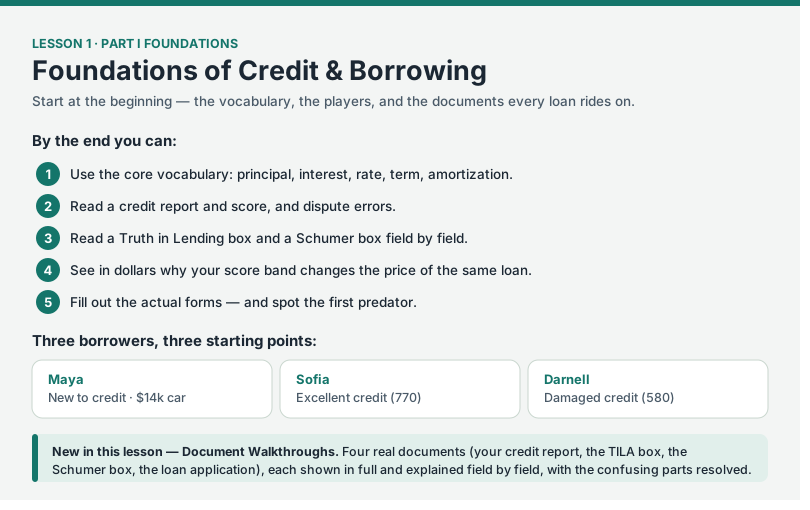
- Understand the core vocabulary of every loan: principal, interest rate, term, and how amortization shifts each payment.
- See how the four-player system — lender, credit bureau, credit report, scoring company — connects, and why the file is yours to inspect.
- Read a credit report field by field, and understand what every number, date, and status line means.
- Trace how a credit score is built from five ingredients and why your band sets the price of everything you'll ever finance.
- Walk the seven-step borrowing journey and decode the two documents every borrower signs: the loan application and the TILA disclosure.
- Recognize the advance-fee loan scam and know exactly where and how to report it.
What Credit Actually Is
To make the vocabulary stick, follow Maya through the moment she actually meets it. She's sitting across a desk from a loan officer at Heartland Credit Union — not signing anything yet, just trying to understand the used-car loan she's considering before she commits to a single dollar of it. As the officer walks her through the deal, every word that matters in this course comes up in order.
"You're looking to borrow fourteen thousand for the car," the officer says. That fourteen thousand is the principal — the actual amount being lent. Not the sticker price with tax and fees rolled in, and not the total Maya will eventually pay back; just the specific sum leaving the credit union and going toward the car today. Every other number in the loan is figured off of this one.
The car's price is roughly $15,500. Maya puts $1,500 down, so the amount she actually borrows — the principal — is $14,000. The down payment reduces what she owes from day one, which in turn reduces every interest charge that follows.
"At your rate, that'll run about eleven percent a year." The eleven percent is the interest rate, and the dollars it produces are the interest — the fee Maya pays for using money that isn't hers. The cleanest way to picture it: interest is rent on money. Just as she pays rent for the months she lives in her apartment, she pays interest for the months she's using the credit union's fourteen thousand — and like rent, it's ongoing, not a one-time charge. Then the officer mentions the detail that surprises every first-time borrower: "The interest is charged on what you still owe, so it shrinks as you pay it down." Maya had assumed eleven percent of fourteen thousand — about $1,540 — every year for the whole loan. Not so: that's roughly the first year, when she still owes nearly the full balance, and it falls every year after as the balance does. Interest rides on the leftover, never on the original forever.
"We can set this up over sixty months." Sixty months — five years — is the term, how long Maya has to repay. The officer flags that the term is a lever with two ends, worth understanding before she picks: a longer term means smaller monthly payments but more interest paid in total, because she's renting the money for longer; a shorter term flips both — bigger monthly bites, less interest overall. The same fourteen thousand can be a comfortable payment that costs more, or a tighter payment that costs less, depending only on where she sets this one dial.
It's worth noticing who's on each side of that desk. The credit union is the lender — whoever provides the money — and the officer points out that lenders aren't interchangeable: a credit union is member-owned and not-for-profit, which often means a lower rate than a big bank or an online lender would quote on the identical loan. (That gap is real money, and Maya will test it later by shopping the same loan around.) Maya is the borrower. If she reads the fine print she'll also meet the older words for the two of them — creditor for the lender, debtor for herself — same roles, dustier names.
"Your payment works out to three hundred four dollars and forty cents, the same every month," the officer says, sliding a printout across the desk. Here's the piece that confuses almost everyone, so slow right down. That $304.40 never changes — but what it's doing changes every single month. Part of each payment covers that month's interest; the rest goes to knocking down the principal. And because interest rides on the balance she still owes, the split between those two shifts as the balance falls.
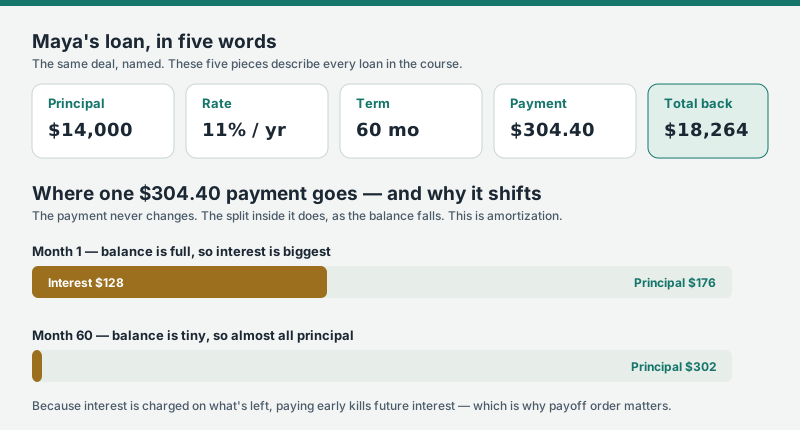
In the first month, Maya owes the full fourteen thousand, so interest is at its biggest — about $128 of her payment is just interest, and only the remaining $176 actually reduces what she owes. By the final month the balance is nearly gone, so almost the entire $304.40 is principal. The payment amount held steady the whole way; its composition quietly flipped. This gradual shift is amortization — paying off a debt through equal payments where, over time, less of each payment goes to interest and more to principal. It's why paying extra early genuinely saves money: a dollar of principal knocked out in month one erases all the future interest that dollar would have generated, while a dollar paid in month fifty-nine had almost no interest left to save.
One last word comes up as the officer prints the terms: "This rate is fixed." A fixed interest rate stays the same for the life of the loan — Maya's eleven percent will still be eleven percent in year five, so her payment is predictable to the penny. Its opposite is a variable rate, which can rise or fall over time, usually tied to a published benchmark — the prime rate, the benchmark set by the market that moves with the broader economy and that variable rates are pinned to — so the payment changes along with it. Maya's car loan is fixed; she'll meet variable rates when we reach credit cards.
The Four Players Keeping Score on Maya
When Maya fills out that application, it feels like a private conversation between her and one credit union. It isn't — and the gap between how it feels and what's actually happening is worth seeing, because three of the four players who shape her deal are people she'll never speak to.
The first player is the lender, the one she's actually sitting with — the credit union deciding whether to hand over the fourteen thousand. That's the only player in the room. The second is the credit bureau — also called a credit reporting agency — a company that quietly keeps a running file on how Maya handles borrowed money. There are three nationwide: Equifax, Experian, and TransUnion. Here's the part that unsettles people: Maya never signed up with any of them, was never asked, and can't opt out. The moment she opened that secured card, Capital One began sending her monthly activity to the bureaus automatically — that's simply how the system works. And there's a catch almost nobody is taught: the three bureaus don't hold identical files, because a given lender might report to one, two, or all three. So Maya's Equifax file and her TransUnion file can genuinely differ. The practical upshot is concrete — she checks all three (a clean report at one tells her nothing about the other two), and if she ever spots an error, she disputes it with each bureau separately, a right guaranteed to her by the Fair Credit Reporting Act (FCRA).
The third player is the credit report itself — the file the bureaus keep. And the fourth is the scoring company — a separate business that takes everything in that report and boils it down to a single number; the two that matter are FICO and VantageScore. State it plainly: the bureaus keep the record, and the scoring companies grade it. They're different companies doing different jobs, which is exactly why your report (the record) and your score (the grade) are two separate things you sometimes get from two separate places.
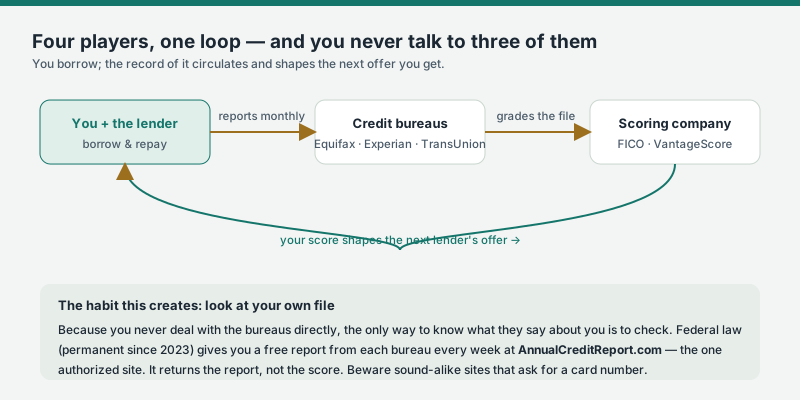
The whole thing runs as a loop, and once Maya sees it she understands why the system feels like it's watching her: she borrows and repays → her lender reports that activity to the bureaus → the bureaus' data feeds the scoring companies → her resulting score helps the next lender decide what to offer → and around it goes. She sits at the center but only ever touches one corner, the lender. That single fact — that she never deals with the bureaus directly — creates the most useful habit in this entire course: the only way to know what they say about her is to go look. And by federal law she can, free, from each of the three bureaus, every week, at AnnualCreditReport.com — the one federally authorized site, which hands back the report, not the score. (This free weekly access became permanent in 2023; before that it was once a year.) The takeaway isn't "the system is spying on me" — it's "the file is mine to inspect anytime, so I should."
Reading the Report — Document Walkthrough: Your Credit Report
With the loop understood, Maya does the one thing it points to: she goes and looks at her own file. About six months after opening her secured card, she pulls her report — and because that card has been quietly reporting the whole time, what comes up isn't blank, just young.
This is the one document Maya fetches rather than fills out, and it's online only — no office to visit, no paper form to request. The single federally authorized place to get it is AnnualCreditReport.com, a site the three bureaus jointly run to satisfy a federal law (the FACT Act, an amendment to the FCRA). It lets her pull a free report from each bureau every week, permanently. She asks for it by name, and what arrives is the report — the record — not her score, which is a separate product sold separately. One trap to name out loud: there are sound-alike sites with similar names and a credit-card field designed to enroll you in paid "monitoring." The real report costs nothing, and even a paid extra copy is capped by law at $14.50. Here is what lands in front of her, filled with her actual data:
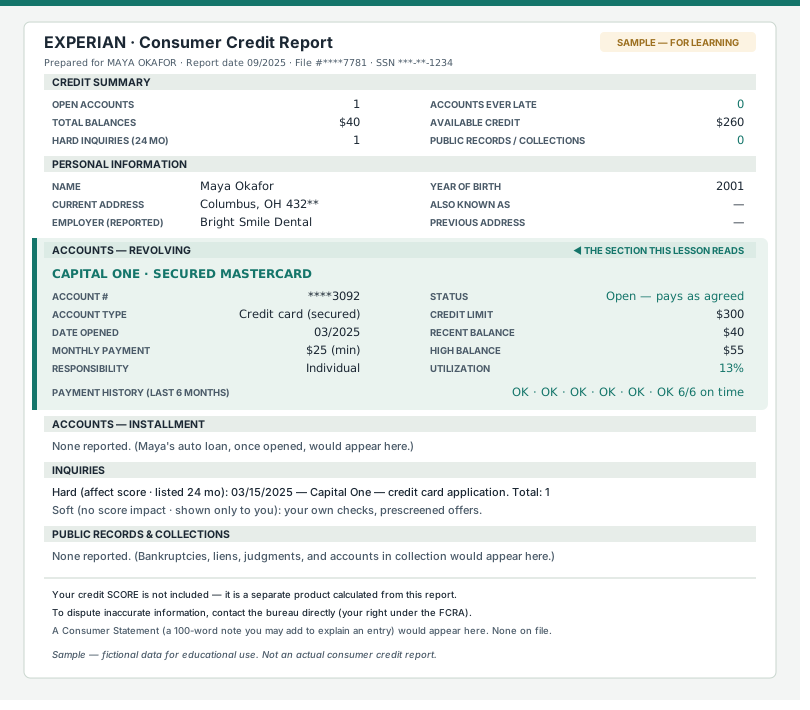
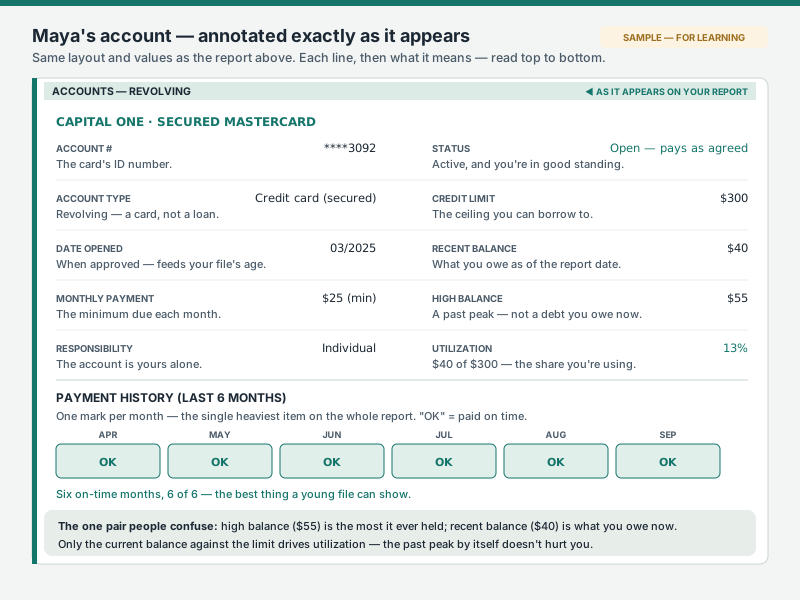
Here's what Maya is actually looking at, in plain terms. The first section, personal information, is just the report confirming who she is — name, year of birth, city, last four of her Social Security number. She isn't reading it for anything flattering; she's checking that all of it belongs to her, because an address in a state she's never visited would be the first sign someone else had been opening accounts under her identity. Everything matches, so she moves on.
The second section is the one that matters, and it holds exactly one entry: her secured card — the only real financial relationship Maya has. A handful of numbers describe how she's been handling it, and this is where it pays to slow down. The card came with a $300 limit, meaning Capital One will let her borrow up to $300 at any time. Her balance is $40, meaning that's how much she's actually borrowed right now. The relationship between those two numbers has a name — utilization, the share of her available credit she's leaning on — and $40 of $300 is about 13%.
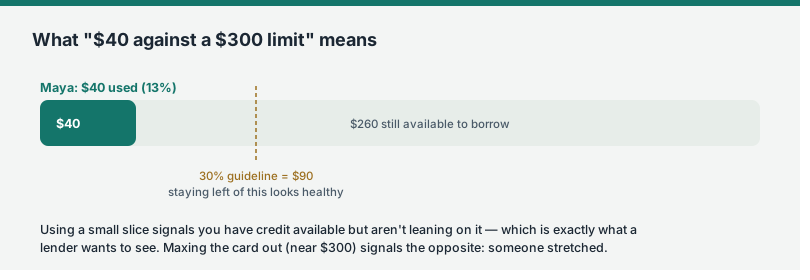
Why care about that ratio? Because to a lender it's a tell. Someone using almost all of their credit — $290 of a $300 limit — looks stretched, as if they're relying on the card to get through the month; someone using a small slice looks like they have the card but don't need it. The guideline is to keep utilization under 30% (under about $90 on Maya's card), under 10% better still. At 13% she's comfortably healthy — and she got there with one move: a single $15 streaming charge she pays off every month, a tiny balance she clears, keeping utilization low and her payment record perfect.
That payment record is next — six month-by-month marks, all on time. It's the most important thing on her whole report, because paying on time is the single biggest ingredient in a score. The status beside it, "open — pays as agreed," sounds like jargon but just means the account is active and she's holding up her end. The third section, inquiries, has one line: the hard inquiry from her March application — the one time she "raised her hand" for credit — which fades within a year. The fourth, public records and collections, reads "none reported," meaning no bankruptcy and nothing sold to a collection agency; blank is perfect. And the score isn't here, because the report is the record, not the grade. Put together: one account, six clean months, nothing she can't cover, no trouble anywhere. Thin, but spotless — which is how everyone with great credit once started.
Now the same account row pulled apart in slow motion, because every account on anyone's report is described by these same columns, and a few are worded in ways that reliably trip up first-timers.
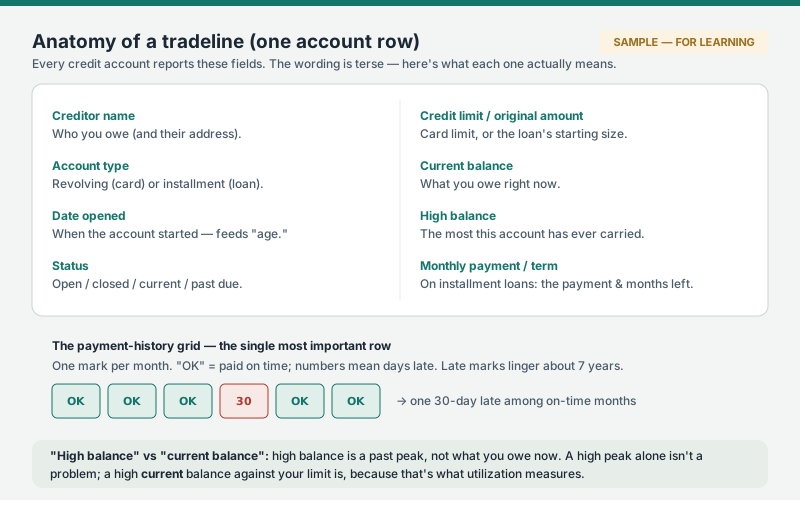
Reading left to right: the creditor name is who she owes — Capital One. The account type says revolving (a card, balance rising and falling under a limit) or installment (a loan repaid in fixed chunks); hers is revolving. The date opened is when the account was established — the day it began, not the day she first used the card, which is why a brand-new account makes a file look "thin" no matter how perfectly it's paid. The status is its current condition in the lender's words. Then two money columns that look alike: the credit limit / original amount is the ceiling (the $300 limit on a card; the original sum on a loan), while the current balance is what she owes right now ($40). The high balance is the most misread number on the report — the most the account has ever carried ($55), a historical peak, not a debt she owes now. The monthly payment / term is mostly a loan field. And the payment-history grid outweighs everything: one mark per month, "OK" or a lateness number, and because on-time payment is the heaviest scoring factor, this row matters most. A late mark lingers about seven years, its sting fading across that span. Maya's is six "OK"s — exactly the picture a young file wants.
Knowing what each field means is half the battle; the other half is that the wording invites a worried guess, and a reader who can't tell whether their nervous reading or the calm one is right tends to freeze and put off what's next. So here's each uneasy field with the anxious reading named and the calm, correct one beside it:
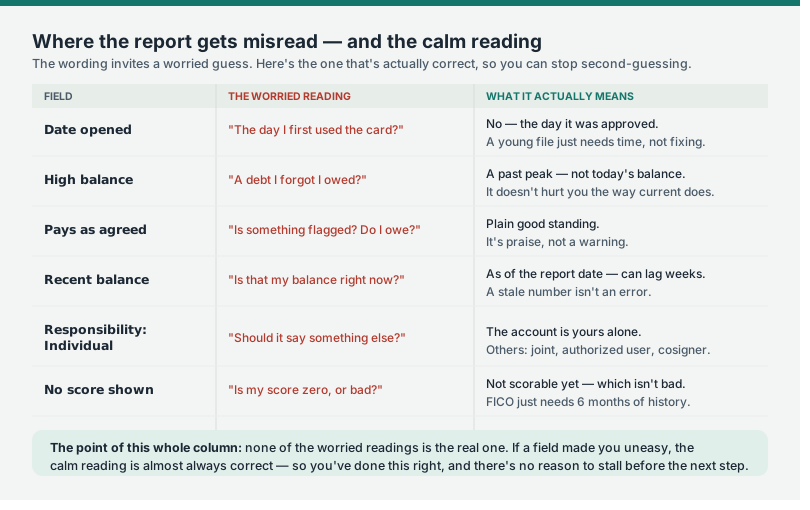
Take them one at a time, the way the worry actually arrives. "Date opened" feels like the day Maya first swiped the card — but it's the day the account was approved; nothing speeds it up, so a young-looking file isn't one she's handled wrong. "High balance" reads like an alarm about a forgotten debt — but it's just the highest the account ever reached, and a big number there isn't a problem, while a big current balance against her limit would be. "Pays as agreed" sounds like jargon hiding bad news — it's the opposite, the report saying she's in good standing. "Recent balance" looks like it should be live, but it's as of the report date and can lag weeks, so a stale-looking number isn't an error. "Responsibility: individual" just means the account is hers alone. And the missing score isn't a zero or a failing grade — she's simply not scorable yet, which for a six-month file is normal. The reason for laying these side by side is one reassurance Maya carries into every later document: if a line made her uneasy, the calm reading is almost always right. She read it correctly. She did the task. There's no reason to stall — and that confidence, more than any single fact, keeps a new borrower moving.
Inquiries — and Why You Can Stop Fearing Your Own Report
When the report says the inquiries section shows "who looked at your credit and why," it's worth being precise, because the word "inquiry" hides two different things, and the difference decides whether you should ever worry.
First, what an inquiry is. It is not a running count of how many times your file's been peeked at. It's an itemized list — each line a dated record of one company pulling your credit, with their name and usually the reason. Maya's report doesn't say "checked once"; it says "March 15, 2025 — Capital One — credit card application." A log, not a tally. And the thing that decides whether a given line matters is what kind of pull it was, because there are two — and only one touches your score. A hard inquiry (hard pull) happens when you apply for credit and a lender checks your file to decide whether to lend — a card, a car loan, a mortgage. Maya's single inquiry is exactly this. Hard pulls are visible to other lenders, can nudge your score down a little (usually a few points), and matter less over about a year (they stay listed for two). A soft inquiry (soft pull) is everything else: you checking your own credit, a lender pre-screening you for "pre-approved" mailers, a card you already hold reviewing your account, sometimes an employer or landlord. Soft inquiries don't affect your score at all, and most aren't even shown to lenders.
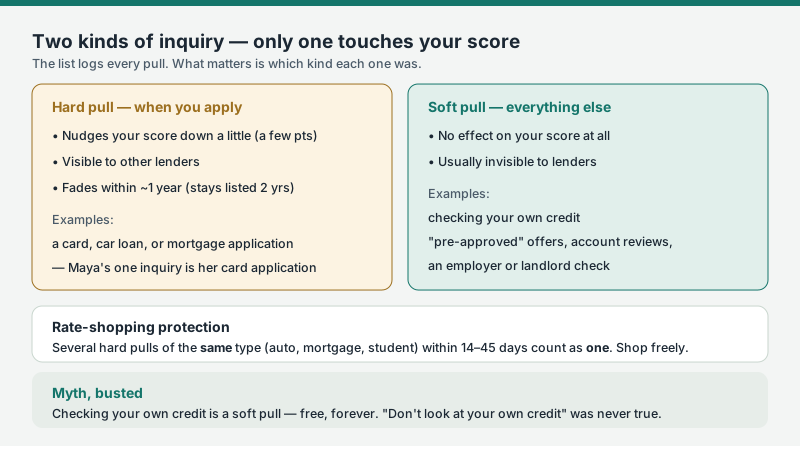
So the question that stops people from ever checking their own credit — "if I look, do I ding it?" — has a clean answer: no. Checking your own report is a soft pull; Maya can pull hers every week, forever, without losing a point. And the worry that follows — won't shopping a car loan around, where four lenders each pull my credit, punish me four times? — is handled on purpose: multiple hard pulls of the same kind (auto, mortgage, or student loan) inside a short window, usually 14 to 45 days, are bundled and counted as a single inquiry. Three credit unions and a bank can all check Maya for the same car in the same two weeks and it counts as one shopping trip. That grace covers same-product rate-shopping only — a card this week and a store card next week are separate hard pulls.
What a Score Is Actually Made Of
A credit score is a number — for FICO, 300 to 850 — that a scoring company calculates from your report and hands a lender as shorthand for "how likely is this person to pay us back?" It feels like a black box, but it's built from five known, weighted ingredients, and seeing which carry the most tells you where effort pays.
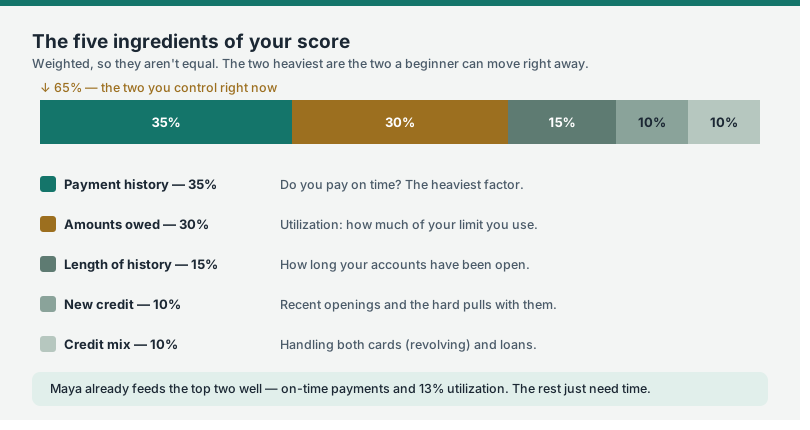
By far the biggest is payment history — about 35% — simply whether you pay on time, which is why Maya's six green months count for so much, and why one missed payment stings: it lands on the heaviest factor. Close behind at about 30% is amounts owed, mostly the utilization we met — and Maya's 13% feeds it well. The encouraging part is right there: the top two ingredients are 65% of the whole score, and they're the two a brand-new borrower can move immediately. The other three are slower. Length of credit history — about 15% — rewards how long accounts have been open, the one Maya can't rush (it's the whole gap between her thin file and Sofia's fifteen-year card). New credit — about 10% — watches recent openings and their hard pulls. And credit mix — about 10% — rewards handling both revolving (cards) and installment (loans), so when Maya takes the car loan she'll actually improve her mix. Put against the three: Sofia's 770 is every ingredient full; Darnell's 580 is a hard year stacking late marks onto the heaviest factor; Maya's missing score is just the clock — two ingredients strong, three waiting on time.
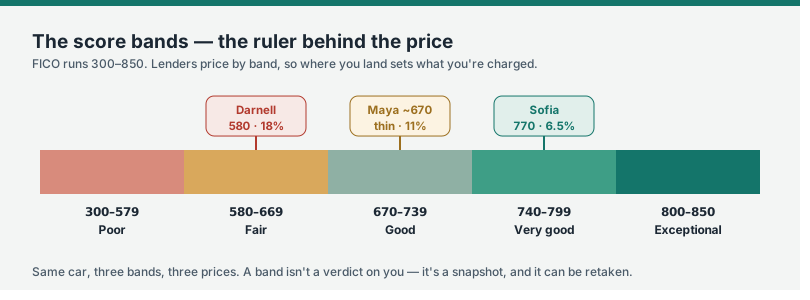
Where the Score Becomes Money — the Same Car, Three Prices
Everything so far exists to produce one number, and that number sets the price of borrowing. Send all three borrowers to buy an identical $14,000 used car on an identical 60-month loan; the only thing that differs is who's signing. Sofia (770) is quoted ~6.5% — about $273.90/month, ~$16,434 total, ~$2,434 of it interest. Maya (thin-but-spotless file, middle band) is quoted ~11% — about $304.40/month, ~$18,264 total, ~$4,264 interest, paying about $1,830 more than Sofia for the same car. Darnell (580, rebuilding) is quoted ~18% — about $355.50/month, ~$21,330 total, ~$7,330 interest, paying about $4,896 more than Sofia for a car identical bolt-for-bolt.
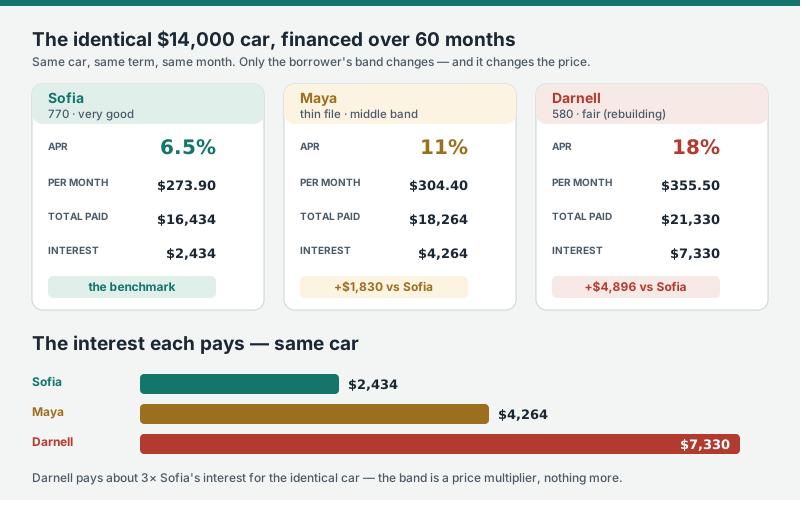
Sit with that gap — it's the engine of the whole course. The car is identical; the term is identical; the only variable is the number each person's history produced, and it swings the price of the same sedan by nearly five thousand dollars. This is why building and protecting your band is the single highest-return thing a borrower can do — a better band quietly discounts the price of everything they'll ever finance. And it reframes Darnell honestly: his 580 isn't a verdict on him as a person, it's a price tag the system attached after a hard year — and price tags can change.
The Families of Credit — Sorting Any Loan with Two Questions
Before we follow Maya through actually applying, it helps to have a map, because every product in this course — and every one she'll ever be offered — is sorted by just two questions. Is it revolving or installment? and Is it secured or unsecured?
The first question is about shape. Revolving credit is a limit you can borrow against, repay, and borrow against again — the balance goes up and down, like Maya's card. Installment credit is a lump sum borrowed once and repaid in fixed payments over a set term — like her car loan, which she'll pay down to zero and be done. The second question is about backing. Secured credit is tied to collateral — something specific the lender can take if you don't pay: the car backs an auto loan, the house backs a mortgage, and Maya's cash deposit backs her secured card. Because the lender has that safety net, secured credit usually carries a lower rate. Unsecured credit has no collateral behind it — only your promise and your record, like most credit cards and personal loans — so the lender is taking more risk and charges more for it. Put those two questions on two axes and every product Maya meets lands in one of four boxes:
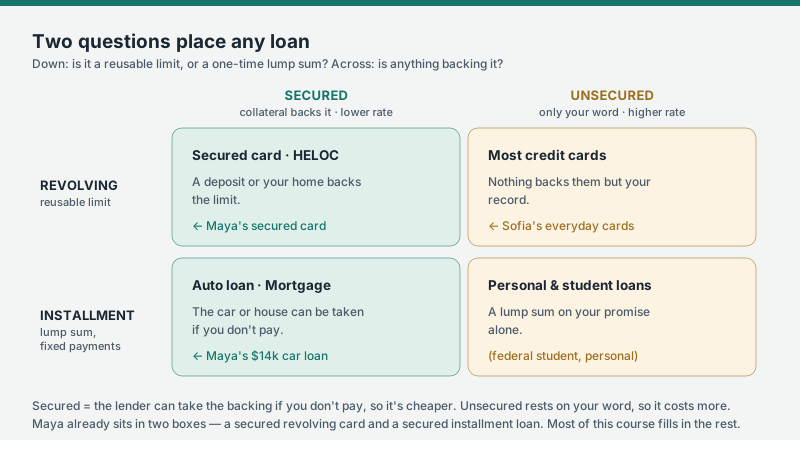
The map pays off immediately for Maya. She already lives in two of the four boxes — a secured, revolving card and a secured, installment car loan — and both are secured precisely because she's new, which is the system letting a beginner in the door with a safety net. As her record grows, she'll graduate toward the unsecured boxes, where the lender trusts her word instead of her collateral. Most of this course is simply a tour of these four boxes, one product at a time: credit cards live in the revolving row; auto, student, and mortgages fill the installment row; and the predatory products we'll learn to spot are mostly unsecured loans priced as if your word were worth almost nothing.
The Borrowing Journey, Step by Step — Document Walkthrough: The Loan Application
Maya now understands the machine; this is the path she actually walks, from "I want a car" to "I'm repaying one." It's the same seven steps for almost any loan in this course, so it's worth seeing once, in order, with her.
- Check her own credit — before she lets anyone else pull it, she pulls it herself (free, soft, score-safe) so there are no surprises and she knows roughly what band she's in.
- Set her number — not the car's price, but the monthly payment her budget can carry. Lenders will happily quote the biggest loan she qualifies for; her job is to decide what she can comfortably repay before she falls for a car.
- Shop and compare lenders — the rate-shopping window from Section 4 is what makes this safe: she can gather quotes from her credit union, a bank, and an online lender inside a two-week window, and the same-product hard pulls collapse to one inquiry.
- Apply — fill out the credit application, the first document of this journey.
- Review the disclosure before signing — the Truth in Lending box, the federally required summary of what the loan truly costs.
- Sign and close — at the branch or online for a credit-union loan, or on paper at the finance desk for a dealer-arranged one.
- Repay — and the loop kicks in: each on-time payment reports to the bureaus, building the very history that earns her a better band next time.
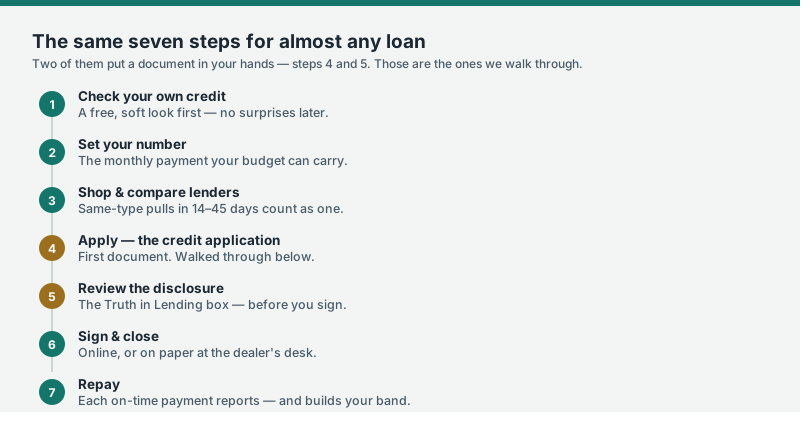
Two of those steps put a document in Maya's hands — the application (step four) and the disclosure (step five) — and those are exactly where beginners freeze. So we walk each one.
The application is the form a lender uses to collect everything it needs to make its decision. Where Maya fills it depends on how she shops: at her credit union it's on their website or at the branch desk; through a dealership it's the dealer's application at the finance office, routed out to lenders; with an online lender it's entirely a web form. So the mode splits by channel — most applications today are online, but a dealer-arranged auto loan is typically filled in person and signed on paper or a tablet at the finance desk. The fields look similar everywhere because federal rules (the Equal Credit Opportunity Act's Regulation B) shape them — the government even publishes model application forms. Here's one filled with Maya's information:
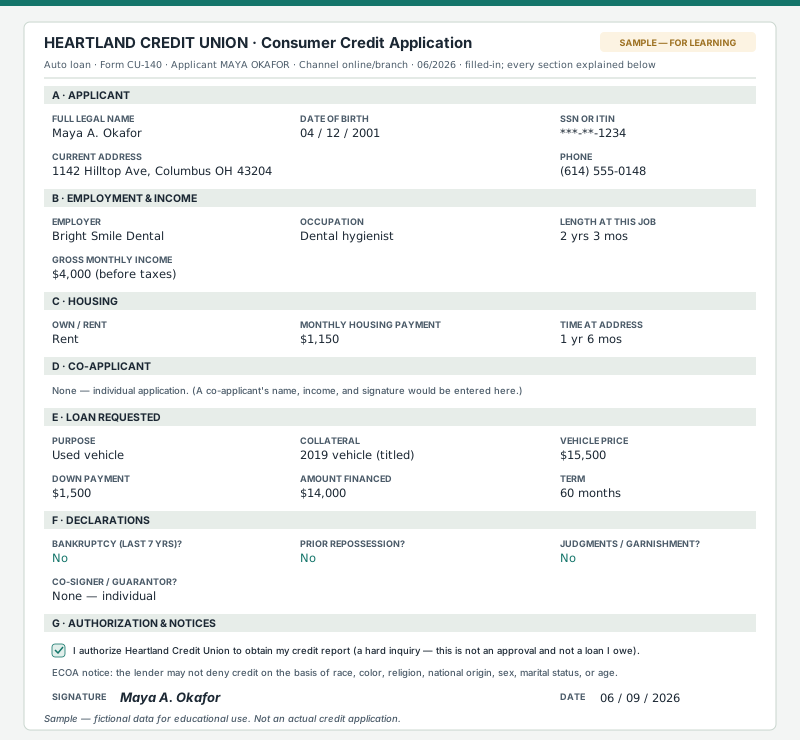
Section by section. A · Applicant is identity: legal name (as it reads on her ID and Social Security card), date of birth, Social Security number — or ITIN (Individual Taxpayer Identification Number, the IRS-issued substitute for people who can't get an SSN), address. B · Employment & income asks her employer, occupation, how long she's held the job, and her gross monthly income. C · Housing asks own or rent, her monthly housing payment, and time at her address — this feeds the debt-to-income check a lender runs to see whether the new payment fits alongside her existing obligations. D · Loan requested is the deal itself: purpose, amount financed, term, down payment. E · Declarations are yes/no history questions — bankruptcy within seven years, prior repossession, whether there's a co-applicant. F · Authorization & notices is where she consents to the credit pull and the ECOA notice appears. Now the blanks that actually make people freeze:
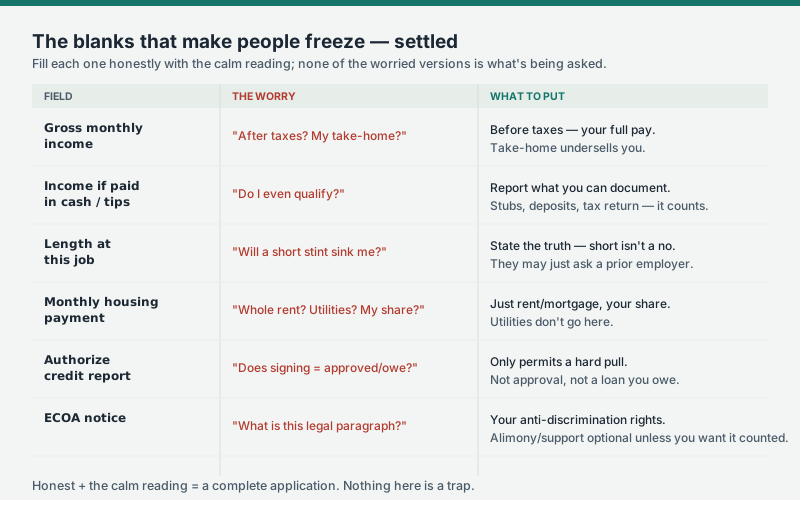
In prose: "Gross monthly income" trips nearly everyone — it means her pay before taxes and deductions, not her take-home; entering take-home would understate her and could cost her the approval. If she were paid partly in cash or tips (she isn't, but many are), the rule is to report what she can document — pay stubs, bank deposits, last year's tax return — because that's what a lender can verify. "Length at this job" worries people with short tenure, but she states the truth; a short stint isn't an automatic no, the lender may just ask for a prior employer. "Monthly housing payment" means her rent (her share if she split it), not utilities. The authorization line only lets the lender pull her credit — it is not an approval and not a loan she's agreed to owe. And the ECOA paragraph is her protection: a lender can't deny her for race, sex, religion, national origin, age, or marital status — with the useful corollary that she needn't disclose alimony or child support unless she wants it counted as income. The reassurance to carry: filled honestly with the calm reading, the application is complete — nothing on it is a trap.
The "debt-to-income check" in Section C compares Maya's monthly debt payments to her gross monthly income: DTI = monthly debt payments ÷ gross monthly income. On her $4,000 gross, if the new car payment plus her other obligations total about $1,200, her DTI is 30%. Lenders like to see it under roughly 36–43%; some mortgage programs allow up to 50% with strong compensating factors. Her car payment is one piece of this — which is why setting her number in step two (before she walks into a dealership) protects her.
The Disclosure — Document Walkthrough: The Truth in Lending Box
Step five was "review the disclosure before signing." That disclosure is the Truth in Lending disclosure — usually called the TILA box, after the federal Truth in Lending Act — and it exists for exactly one reason: to force every lender to state the real cost of a loan in the same four numbers, in the same standardized box, no matter how a salesperson framed the deal. It's the most borrower-friendly document in all of lending, and once Maya can read its four boxes, no lender can hide the price from her.
Unlike the application, Maya doesn't fill this one out — the lender produces it and is required to hand it to her before she signs. The mode follows the channel: for an online loan it arrives as an on-screen panel and a PDF; for a dealer-arranged auto loan it's printed in the stack of papers she signs at the finance desk. Because the format is federally standardized, it has the same shape and the same four headline boxes everywhere — which is the whole point. Here is Maya's:
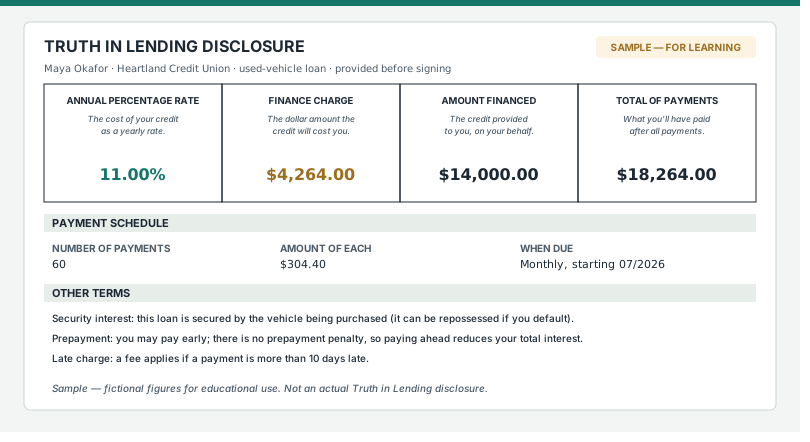
The four boxes, left to right. The Annual Percentage Rate (APR) is the cost of the credit as a yearly rate — Maya's 11.00%, the headline price. The Finance Charge is the dollar cost of borrowing — the total she'll pay just for the use of the money, on top of the car: $4,264 over the life of the loan. The Amount Financed is the credit actually provided to her — $14,000, essentially what she's borrowing. The Total of Payments is what she'll have paid after every scheduled payment is made — $18,264, which is simply the amount financed plus the finance charge. Below the four boxes, the payment schedule spells out the rhythm (60 payments of $304.40, monthly), and the other terms name three things worth reading: the security interest (the car backs the loan and can be repossessed if she defaults — failing to repay as agreed — the "secured" from the families map made concrete), the prepayment terms (no penalty, so paying early saves interest), and the late charge. Four numbers and three terms, and Maya knows the whole cost of the deal.
Now the readings that confuse people:
In prose: the two middle boxes are the ones people mix up. "Amount financed" is what Maya is borrowing — the $14,000 — not the total she'll repay; "total of payments" is the all-in $18,264 she'll have paid by the end, and the gap between those two ($4,264) is exactly the finance charge. So the three numbers tell one story: borrow $14,000, pay $4,264 to borrow it, hand over $18,264 in all. The "finance charge" isn't a hidden fee bolted on — it's the dollar version of the interest she already understands. The "security interest" line isn't a threat — it's the standard fact that a secured loan is tied to its collateral. And "prepayment: no penalty" is good news she can act on — paying ahead shrinks that finance charge. The reassurance: the box is on her side, designed so the price can't hide; if she can read four numbers, she can't be fooled on cost.
APR vs. the Interest Rate — the One Number to Compare
The first box, the APR, deserves its own beat, because it's the single most useful number in borrowing and it's constantly confused with the interest rate. The interest rate is the cost of the money itself — the 11% rent on the balance. The APR (annual percentage rate) folds in that rate plus most of the required fees, and expresses the whole all-in cost as one yearly percentage. So the APR is always equal to or higher than the interest rate, never lower.
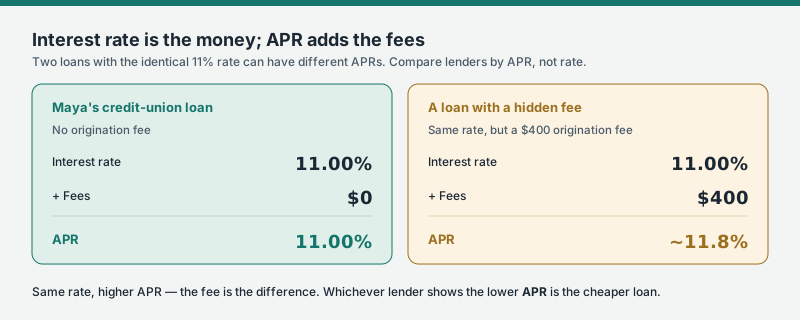
When a loan has no extra fees, the rate and APR are identical — which is exactly Maya's clean credit-union loan, where both read 11.00%, and the matching numbers are themselves a quiet sign that no junk fees are buried in the deal. But when a lender tacks on charges — an origination fee (a fee some lenders charge just to set up the loan), say — the rate can still advertise a tempting 11% while the APR climbs to tell the real story: the same 11% rate plus a $400 origination fee works out to an APR of roughly 11.8%. This is the practical takeaway that protects Maya for the rest of her borrowing life: when she's comparing two lenders' offers, she compares the APR, not the rate, because the APR is the only number that includes the fees. A lender quoting a slightly lower rate but a higher APR is the more expensive loan, full stop — and that's precisely how a worse deal disguises itself as a better one.
The Card's Cost Box — Document Walkthrough: The Schumer Box
Maya's secured card came with its own disclosure, and it's worth reading now because she already holds one and will hold more. A credit card's standardized cost summary is the Schumer box (named for the senator who pushed it into law) — it's to a credit card what the TILA box is to a loan: a federally required table that states every rate and fee in the same format on every offer, so no card can bury its costs.
The Schumer box rides along with every card offer — on the paper mailer that arrives in the mail, and on the offer page online before Maya clicks "apply." She doesn't fill anything in; she reads it to compare cards. The mode is whichever channel the offer came through, but the table is identical either way because the format is federally fixed. Here's the one that came with her secured card:
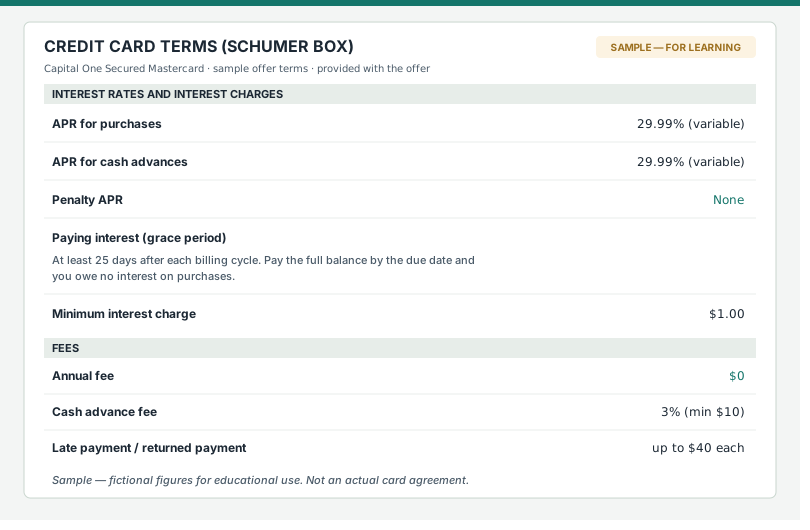
The box, top to bottom. The first section is rates. The APR for purchases (29.99%, variable — secured cards run high, which is fine because Maya never carries a balance) is the rate charged on any balance she carries past the due date. The APR for cash advances is the rate if she pulls cash from the card. The penalty APR is a punishing rate some cards switch you to after a late payment (Maya's says "none," which is good). Then the single most important line on the whole box: paying interest — the grace period. It says that if she pays her full balance by the due date, she owes no interest on purchases at all. That line is the entire reason a credit card can be free to use — pay in full, owe nothing. The second section is fees: the annual fee ($0 here — some cards charge just to exist), the cash advance fee, and the late/returned payment penalties.
The ambiguity that scares people off cards is the big APR. "29.99%" reads like a number that will devour her — but it only ever applies to a balance she carries past the due date; because of the grace period, if she pays the full statement balance each month she owes zero interest, which is exactly how Maya uses it. "Variable" doesn't mean the rate jumps on a whim — it tracks the prime rate, moving with the broader economy. A "cash advance" is not the same as a purchase — it usually has no grace period (interest starts immediately) plus a fee, so it's the one card feature to avoid. And "annual fee: $0" has no catch — the card genuinely costs nothing to hold. The reassurance to carry: a credit card's frightening headline rate is conditional, not automatic. Used as a pay-in-full tool, the scary 29.99% never touches her — and that's the difference between a card that builds her credit for free and one that quietly costs a fortune.
Predator Watch — the Advance-Fee Loan Scam
Every category of borrowing has a predator that feeds on the people most desperate for it, and Lesson 1's belongs to the very situation Darnell is in: a 580 score, bills behind him, and an urgent need for cash that mainstream lenders keep declining. That desperation is the opening. The advance-fee loan scam promises him the one thing real lenders won't — guaranteed approval regardless of credit — and asks for just one thing first.
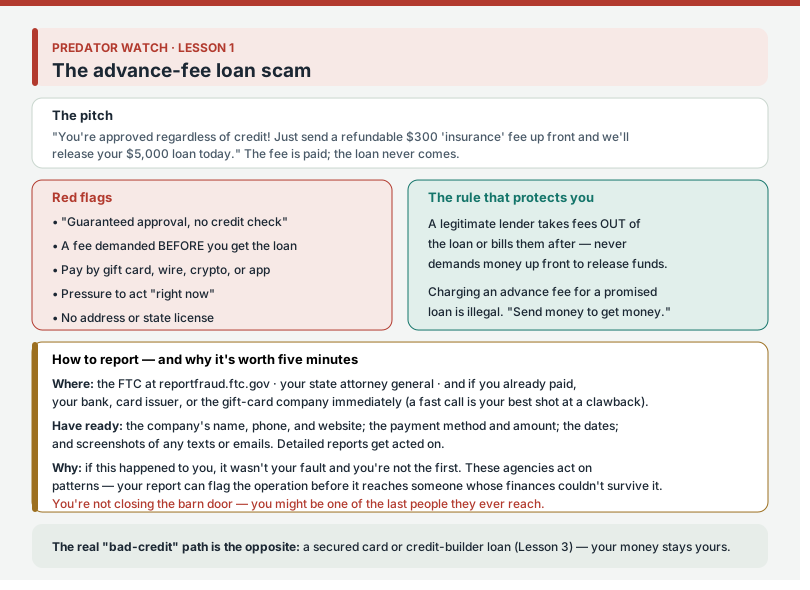
The tell is in the name: an advance fee — money demanded before you receive the loan. The story varies (it's called insurance, processing, a first payment, or taxes), but the structure is always the same: send money to get money, and once Darnell sends it, the lender vanishes. The rule that immunizes him is simple and absolute: a legitimate lender never requires an upfront payment to release a loan. Real lenders take their fees out of the loan amount or bill them afterward — they don't ask you to wire $300 in gift cards first. Charging an advance fee for a promised loan is actually illegal under the FTC's Telemarketing Sales Rule, and the unusual payment demand (gift cards, wire, crypto) is itself the giveaway, because those are the channels scammers use precisely because they can't be reversed. The cruelest part is the bait — "guaranteed approval regardless of credit" — is aimed straight at someone like Darnell who's been turned down and is tired of it. So the lesson pairs the warning with the truth: a real path for bad or thin credit does exist, and it's the exact opposite of this — a secured card or credit-builder loan where his own money stays his. Anyone who needs the fee from him to give him the loan is not a lender.
Some people reading this didn't recognize a pitch they're about to face — they recognized something that already happened. This beat is for them. The advance-fee scam doesn't work on people who are comfortable and unhurried — it works on people who've been turned down three times and need money now. That desperation isn't a flaw; it's what the scam is aimed at. The "guaranteed regardless of credit" line is engineered for someone who's heard "no" enough times to be grateful for a "yes," and the unusual payment method — gift card, wire, crypto — is buried in a story about insurance or taxes designed to feel plausible under stress. Getting caught wasn't a failure of judgment. It was the design working as intended.
If this already happened to you, it wasn't your fault and you're not the first. Here's how to make sure you're one of the last. Where to report: file with the FTC at reportfraud.ftc.gov (the federal agency for fraud) and separately with your state attorney general's consumer-protection office, which handles scams operating in your state. The CFPB at consumerfinance.gov/complaint is a third channel — file there too, with the caveat that the CFPB's enforcement capacity has been reduced through 2025–26, so use it alongside the others, not instead of them. What to have ready: the company's name, phone number, and website; the payment method and exact amount; the dates of contact; any texts, emails, or screenshots. Reports with specifics get acted on — vague ones don't. Why it matters: you may not recover the money, but your report feeds the pattern these agencies use to shut operations down. The person it protects next might be someone in a position where they couldn't absorb the loss you just took — and that's a real outcome of a five-minute report.
Where to Turn — the Recourse Stack
Recognizing the scam is half of Darnell's protection; the other half is knowing he isn't powerless. Whenever a borrower is scammed, mistreated, or stuck with a lender who won't make things right, there's a ladder of places to complain — and the rule that runs through this whole course is to use more than one, because no single agency is a guaranteed fix.
For an outright scam like the advance-fee loan, Darnell's first stop is the FTC (the Federal Trade Commission), the federal agency for fraud, at reportfraud.ftc.gov. Alongside it he files with his state attorney general, whose consumer-protection office handles scams operating in his state. If a licensed lender or bank is involved, his state financial regulator (often a department of financial institutions) oversees them directly. And there's the CFPB (the Consumer Financial Protection Bureau), the federal agency built specifically for complaints about financial products, at consumerfinance.gov/complaint — with the honest caveat this course will repeat: the CFPB's capacity has been cut back and its authority contested through 2025–26, so it's one channel to use alongside the others, never the only one to rely on.
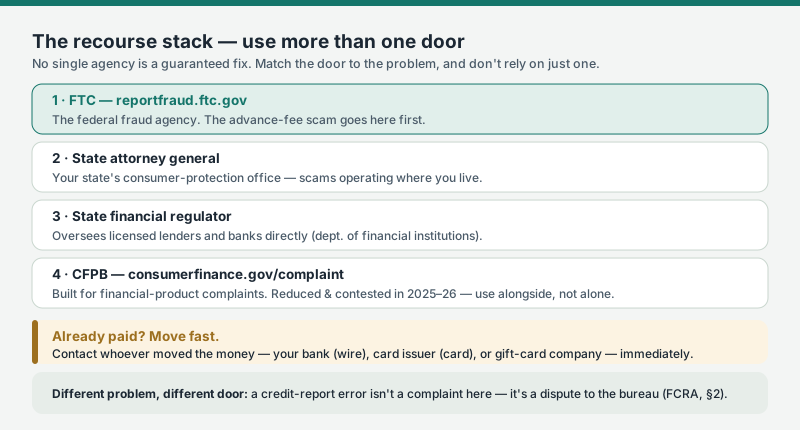
One time-sensitive move sits on top of the ladder: if Darnell already sent money, he contacts whoever moved it immediately — his bank for a wire, the card issuer for a card payment, the gift-card company for a gift card — because a fast report is sometimes the only chance to claw funds back. And this same ladder serves any borrowing dispute later in the course, not just scams — a lender misreporting to the bureaus, a servicer mishandling payments, a junk fee. Being wronged by a lender isn't the end of the road; it's the start of a complaint with several doors. The one thing to match correctly: a credit-report error — a wrong late mark, an account that isn't yours — doesn't go to these agencies first; it goes to the bureau as a dispute under the FCRA, the separate path from Section 2. Match the door to the problem.
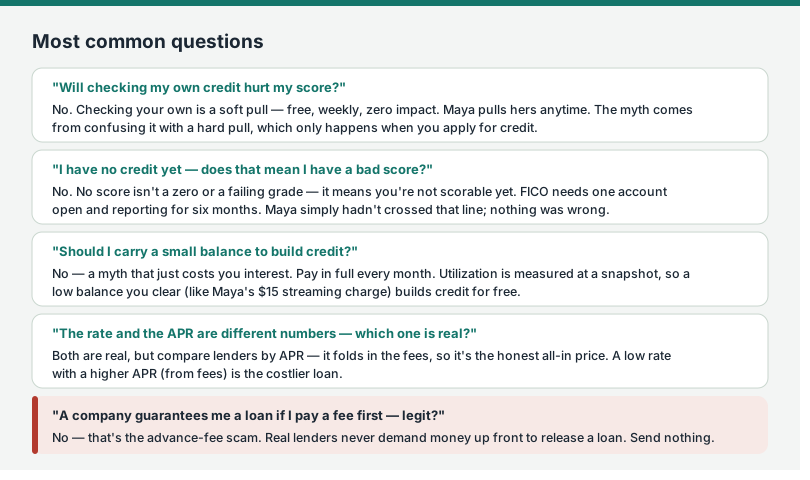
Most Common Questions
These are the questions real beginners ask, in plain words, answered with the people from this lesson.
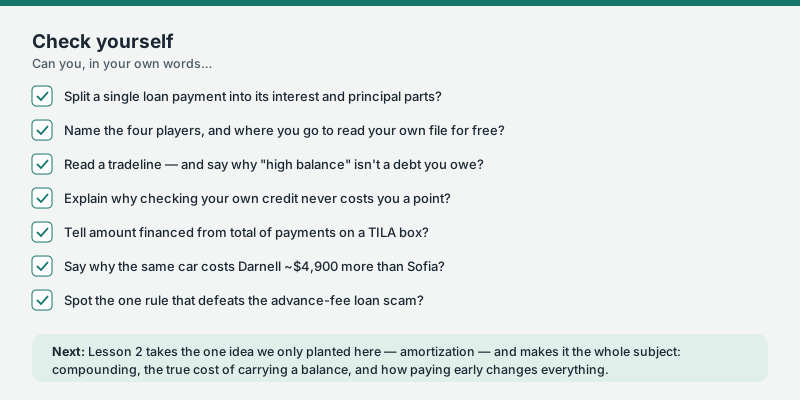
Check Yourself
Before moving on, a quick test against where we started — if each of these feels answerable, the foundation is set.
Key Takeaways
- Interest is rent on money, charged only on what you still owe — which is why it shrinks with every payment, and why paying extra early saves the most.
- Your credit report is yours to inspect free at AnnualCreditReport.com every week — the only way to know what lenders see is to go look.
- Payment history (35%) and amounts owed (30%) together make up 65% of your score — and they're the two you can move right now.
- The same $14,000 car costs Darnell nearly $5,000 more than Sofia for the same vehicle on the same term — not because the car differs, but because their scores do. Your band is your price tag.
- Always compare APR, not the interest rate — it's the only number that folds in the fees and can't hide a worse deal behind a tempting rate.
- A legitimate lender never requires an upfront payment to release a loan. Any demand for money before you receive money is a scam — illegal under federal law.
Quiz — 5 Questions
Answer one at a timeWhat does APR measure that the interest rate alone doesn't?